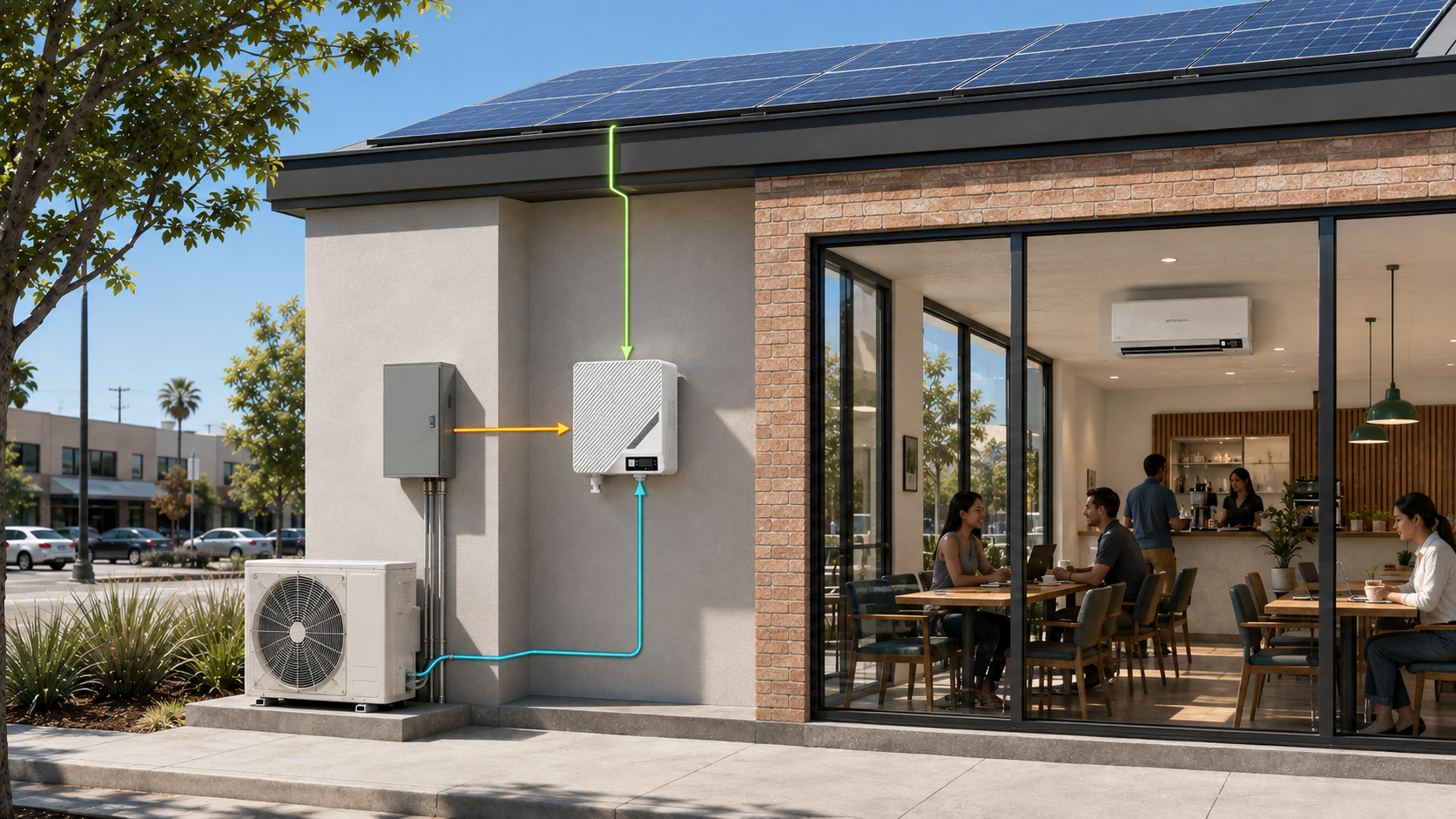
Solar power peaks exactly when cooling demand is highest — making solar-direct air conditioning a natural
fit for C&I buildings. No large battery bank needed. A leaner system investment that covers your
biggest daytime load.
Multi-zone
Solar-direct
No large storage required
Optional small storage
High outdoor heat · Continuous indoor cooling
SOLUTION · SOLAR AIR CONDITIONING
From one unit to many, turn sunlight into cooling first
For homes, shops, offices, and C&I sites: multiple air conditioners can share one
front-end solar system, with grid coordination or storage selected by daytime and nighttime cooling needs,
outage requirements, and investment limits.
Use sunlight first; let the grid fill only the gap
Rooftop solar feeds cooling first through the DC bus. When changing cloud cover reduces
solar output, the grid supplies the missing power in real time so indoor cooling remains stable within
the configured operating range.
PARAFLOW SHARED ENERGY
02
One solar system supports multiple standard-priced air conditioners
Paraflow centrally manages solar energy at the front end and distributes it dynamically
according to room demand. When an empty room stops cooling, available solar power shifts to the units
still running.
OPTIONAL ENERGY STORAGE
03
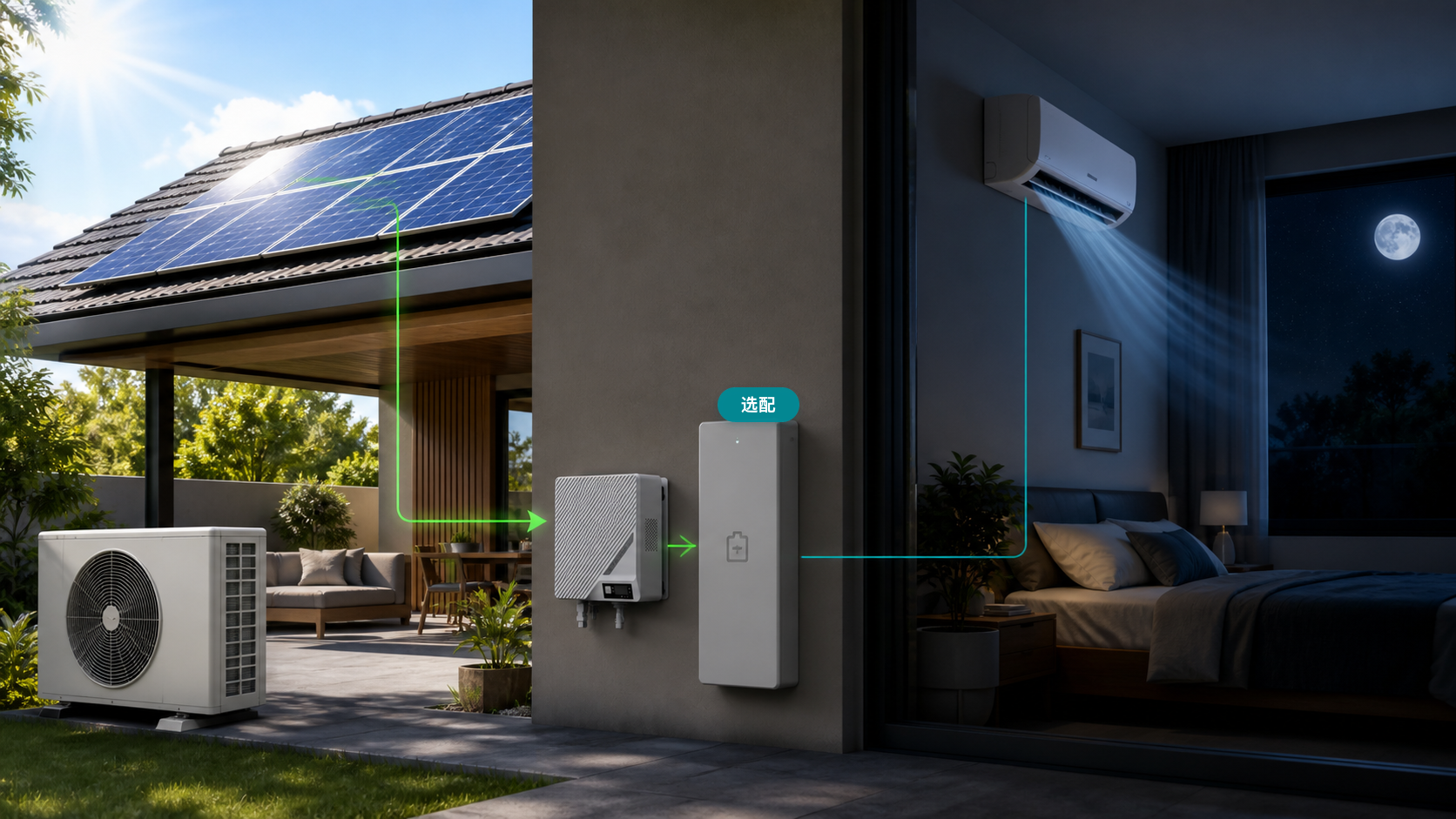
Add storage only when needed and use daytime surplus for night cooling
When daytime cooling demand is low and solar energy remains available, surplus power can
charge optional storage. At night, it can support standard air conditioners according to critical
rooms, target duration, and load priority.
SOLAR-FOLLOWING OUTAGE MODE
04
During an outage without storage, the compressor can still follow sunlight
After a daytime grid outage, once available solar power exceeds the minimum operating
threshold, the compressor can adjust smoothly with solar output and reduce repeated starts and stops.
CONFIGURATION · CHOOSE WHAT YOU NEED
Storage is optional—choose by actual usage hours
First determine whether cooling demand occurs mainly by day or night, then decide whether
to add storage based on outage frequency, target runtime, and investment limits.
No-storage configuration
Best suited to daytime cooling loads
The system uses available solar first, with real-time grid support when the grid is available.
Simpler initial configuration with less unnecessary battery investment
Balance solar utilization and target cooling while the grid is available
Follow sunlight during daytime outages after minimum conditions are met
Optional-storage configuration
Add nighttime cooling and outage capability
Store surplus daytime solar and support evening use according to storage capacity and load strategy.
For homes and projects with defined nighttime cooling needs
Design around critical rooms, target duration, and load priority
Actual runtime depends on usable storage, ambient temperature, and load
Not sure which configuration fits? Size the system by air-conditioner count, usage hours, and local solar
conditions.